 Serengeti Safari Packages
Ngorongoro Crater: the Floor, the Fees and a Day on the Crater Floor
Ngorongoro Crater is a collapsed volcano in northern Tanzania whose floor holds about 25,000 large animals by Wikipedia's count (other sources say around 30,000), including black rhino under 24-hour ranger protection per Duma Explorer. This guide covers how the caldera formed, the animals on the floor, the exact entry fees from the NCAA tariff, the descent roads and gate hours, and what a Ngorongoro crater safari package actually includes. The figures come from official and published sources, with conflicts shown where sources disagree. When you are ready to book, the Serengeti safari packages compared on this site list every price, park fee rule and campsite in one table.
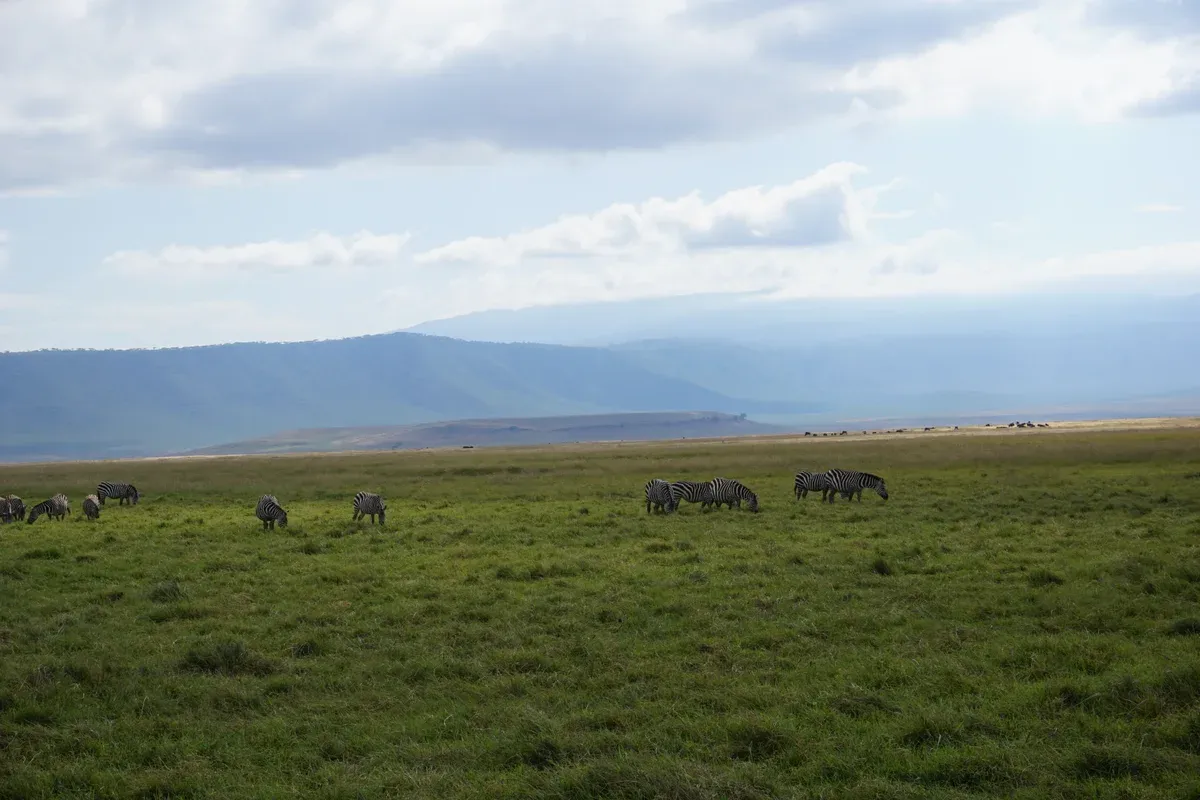
Zebra on the grassy floor of Ngorongoro Crater. Photo: Roryjm0, CC BY-SA 4.0, via Wikimedia Commons
Quick answer Ngorongoro Crater in brief
Ngorongoro Crater is a volcanic caldera 610 metres deep with a floor of 260 km² that sits 1,800 metres above sea level, about 180 to 190 km west of Arusha. Entry for a non-East African adult costs $70.80 and the crater service fee is $295 per vehicle per trip under the NCAA tariff.
Key takeaways
- Compare 3-Day Serengeti Big Five Safari at $900, which includes the crater service fee.
- Read how the animals of the Serengeti compare with the crater's resident herds.
- Check the park and crater fees on the homepage price table.
- See the best time to visit Serengeti for how the seasons affect the crater rim.
What the Crater Is
Ngorongoro Crater is the largest inactive, intact and unfilled volcanic caldera in the world, and it sits inside a conservation area where people and wildlife share the land.
The Numbers Behind the Caldera
The crater formed when a volcano collapsed two to three million years ago. Wikipedia estimates the original volcano stood 4,500 to 5,800 metres high and was active from about 2.45 to 2 million years ago. What is left is a bowl 610 metres deep with a floor of 260 km² lying at 1,800 metres above sea level, enclosed by a rim that Duma Explorer puts at about 2,300 metres. The crater lies 180 km west of Arusha by Wikipedia's measure and 190 km, or 3.5 to 4 hours of driving, by Duma Explorer's. In 2013 a panel in Arusha named Ngorongoro one of the Seven Natural Wonders of Africa. Two other calderas sit in the same highlands. Olmoti is about 6.5 km across, and the Munge River that drains it feeds the Ngorongoro wetlands and Lake Magadi. Empakaai is about 6 km across, reaches 3,250 metres at its highest point, and holds a deep soda lake covering roughly 75 percent of its floor to a depth of about 85 metres, with hiking permitted down to the shore. The table pulls the main figures together with their sources.
A note on the listing years. The Ngorongoro Conservation Area was inscribed by UNESCO in 1979 as reference 39. The site was on the World Heritage in Danger list from 1984 to 1989 and gained mixed natural and cultural status in 2010 because of the human history at Olduvai Gorge, which has its own page here.
| Fact | Figure | Source |
|---|---|---|
| Caldera formed | Volcano collapsed 2-3 million years ago | Wikipedia, Ngorongoro Crater |
| Original volcano height | Estimated 4,500 to 5,800 m | Wikipedia, Ngorongoro Crater |
| Depth | 610 m (600 m wall per SafariBookings) | Wikipedia / SafariBookings |
| Floor area | 260 km² | Wikipedia, Ngorongoro Crater |
| Floor elevation | 1,800 m above sea level | Wikipedia, Ngorongoro Crater |
| Rim elevation | About 2,300 m | Duma Explorer |
| Distance from Arusha | 180 km (Wikipedia) or 190 km and 3.5-4 hours (Duma Explorer) | Wikipedia / Duma Explorer |
| Ngorongoro Conservation Area | 8,292 km², established 1959 | Wikipedia, NCA |
| UNESCO status | Inscribed 1979, ref 39, mixed status 2010, danger list 1984-1989 | Wikipedia, NCA |
The Maasai and the Conservation Area
The Ngorongoro Conservation Area is not a national park. The NCAA describes it as a multiple land-use area of 8,292 km² where wildlife lives alongside semi-nomadic Maasai herders, and the wider Ngorongoro Lengai UNESCO Global Geopark around it covers 12,000 km². Wikipedia records the Maasai population of the conservation area as about 8,700 in 1966 and 93,136 in 2017, projected to reach about 161,000 by 2027.
That growth sits behind a live political dispute. Wikipedia says relocation of residents to Msomera, about 600 km away, began in 2021, while Human Rights Watch says the government programme began in 2022 and aims to move over 82,000 people. Human Rights Watch also documented 13 ranger beatings between 2022 and 2023 based on interviews with nearly 100 people.
Wikipedia counted 752,232 tourists visiting the conservation area in 2023. The Ndutu plains also lie inside the same conservation area and are covered on the Ndutu page.
Animals on the Crater Floor
The floor holds a dense resident population of large mammals, and it is known as a black rhino refuge. No sighting is ever guaranteed.
Counts by the Source
Wikipedia says about 25,000 large animals, mostly ungulates, live on the crater floor. Roadtrip Africa puts the number around 30,000 and adds that seeing the Big Five in one day is not unusual. Duma Explorer lists resident herds of about 7,000 wildebeest, 4,000 zebras, 3,000 elands and 3,000 gazelles, plus about 300 elephants that are mostly solitary bulls. The crater is famous as a rhino refuge. Wikipedia tracks the black rhino population from about 108 in 1964-66 down to 13 in 1993 and back to 55 as of 2018, while Duma Explorer says 26 to 40 black rhinos live there under 24-hour ranger protection. Treat the two counts as a range rather than a promise, because even on a full day on the floor a rhino can stay out of sight. SafariBookings names lion and spotted hyena as the main predators with leopard regularly seen. The crater lions have a hard history. Wikipedia records 75 to 100 lions before a crash to 12 in 1962, a recovery to about 100 by 1975, the loss of 34 percent of the population to tick-borne disease and canine distemper in 2001, and 62 lions counted in 2001 after a low of 29 in 1998. Duma Explorer currently gives over 55 lions.
Some animals are missing on purpose by geography. Wikipedia says giraffe, impala, topi, oribi and Nile crocodile are absent from the crater, and Mduma's shrew is its only endemic mammal. Lake Magadi, a shallow soda lake about 1.7 metres deep, often hosts thousands of mainly lesser flamingos, which is the crater's bird spectacle. The migratory wildebeest that cross the wider conservation area, 1.7 million of them by Wikipedia's figure, arrive in December and leave in June, but the floor herds stay year round. You can read more on Serengeti animals.
ONE DAY in the Ngorongoro Crater - Is That Enough Time?
A photographer's day on the crater floor with its wildlife, and whether one day is enough. Third-party video by Pangolin Wildlife Photography. This site did not shoot it and has no relationship with the creator.
Fees, Hours and the Day on the Floor
A Ngorongoro crater safari has two separate costs, the per-person entry permit and, once you go down, a crater service fee charged per vehicle. The figures below come straight from the NCAA tariff page.
What the NCAA Tariff Charges
The Ngorongoro entry permit for a non-East African adult aged 16 and over is $70.80, and children aged 5 to 15 pay $23.60, with under 5s free. Expatriates living in Tanzania pay $35.40. The NCAA states the permit is valid for one entry within 24 hours only, while Roadtrip Africa describes a day pass valid for 12 hours and an overnight permit for 24 hours, so ask your operator which reading applies to your booking.
The crater service fee is $295 per vehicle per trip for non-East African citizens, one time and not per person as Duma Explorer confirms, and TZS 11,800 for Tanzanian and East African citizens. Because it is a vehicle fee, its cost per person depends on how many travellers share the car. Lodge and permanent tented camp stays in the conservation area carry a concession fee of $59 per person aged 16 and over, which is separate again.
The NCAA does not list a transit fee or VAT as separate items on its tariff page, and it warns tariffs are subject to change without prior notice. Self-drive visitors face one more cost, since Roadtrip Africa says a park ranger must ride into the crater at $40 cash per vehicle. Olduvai Gorge entry adds $35.40 per adult under the same tariff.
| Fee | Amount | Who pays |
|---|---|---|
| NCA entry permit, adult | $70.80 per 24 hours | Non-East African adults 16+ |
| NCA entry permit, child | $23.60 per 24 hours | Children 5-15, under 5 free |
| NCA entry permit, expatriate | $35.40 | Tanzania residents |
| Crater service fee | $295 per vehicle per trip | Non-East African vehicles |
| Crater service fee | TZS 11,800 per vehicle | Tanzanian and East African citizens |
| Lodge concession fee | $59 per person per night | Guests 16+ at lodges and permanent camps |
| Self-drive ranger | $40 cash per vehicle | Self-drive vehicles descending |
| Olduvai Gorge entry | $35.40 adult, $11.80 child | Non-East African visitors |
Down and Up: the Roads and the Clock
The NCAA rules say the Seneto road is descent only, Lerai is ascent only, and Lemala, also called Sopa, serves both directions. Duma Explorer disagrees on the climb, describing descent via Seneto in the west and ascent via Lemala in the east, so follow your guide's local knowledge on the day. Gates and barriers open at 06:00 and close at 18:00, except the Seneto Descent Gate which closes at 16:00.
Descending early matters, because Wikipedia reports an IUCN-linked cap of 50 vehicles in the crater at one time and the NCAA limits vehicles to five around any one animal or kill. Duma Explorer describes a six-hour limit per crater game drive as a soft logistical limit rather than a hard rule, while the NCAA regulations list no time limit on the floor, and both readings are given here. A licensed guide is required for all visitors to the crater.
Two forests on the floor, Lerai and Layanai, are closed to entry, and dogs are not allowed in the crater. The speed limit in the conservation area is 25 km/h. Once you have booked, the crater fee is not always in the price. The 3-Day Serengeti Big Five Safari at $900 explicitly includes entry, transit, concession, camping fees and the crater service fee, and a night at the Simba public campsite in Ngorongoro. The 4-Day Serengeti Camping Safari at $950 lists entrance fees as included and camps at Ngorongoro A. The Serengeti Fly-In Safari at $2,750.77 lists all fees and taxes as included and sleeps one night at Ngorongoro Serena Lodge.
By contrast the 3-Day Serengeti Camping Safari at $770 does not state whether park fees are in the price, so the listing asks readers to confirm with the operator. For bigger budgets, the 10-day Gosheni itinerary includes the crater service fee and beds at Naserian Safari Camp on the rim.
- Bring ID, since the TANAPA tariff for the parks states proof of identification is mandatory at entry gates and fees once paid are non-refundable.
- Expect cold nights on the rim, where Duma Explorer puts temperatures at about 0 to 5 degrees C.
- Plan the descent for the morning, because the Seneto Descent Gate closes at 16:00 under the NCAA rules.
Sources: NCAA tariff and NCAA rules
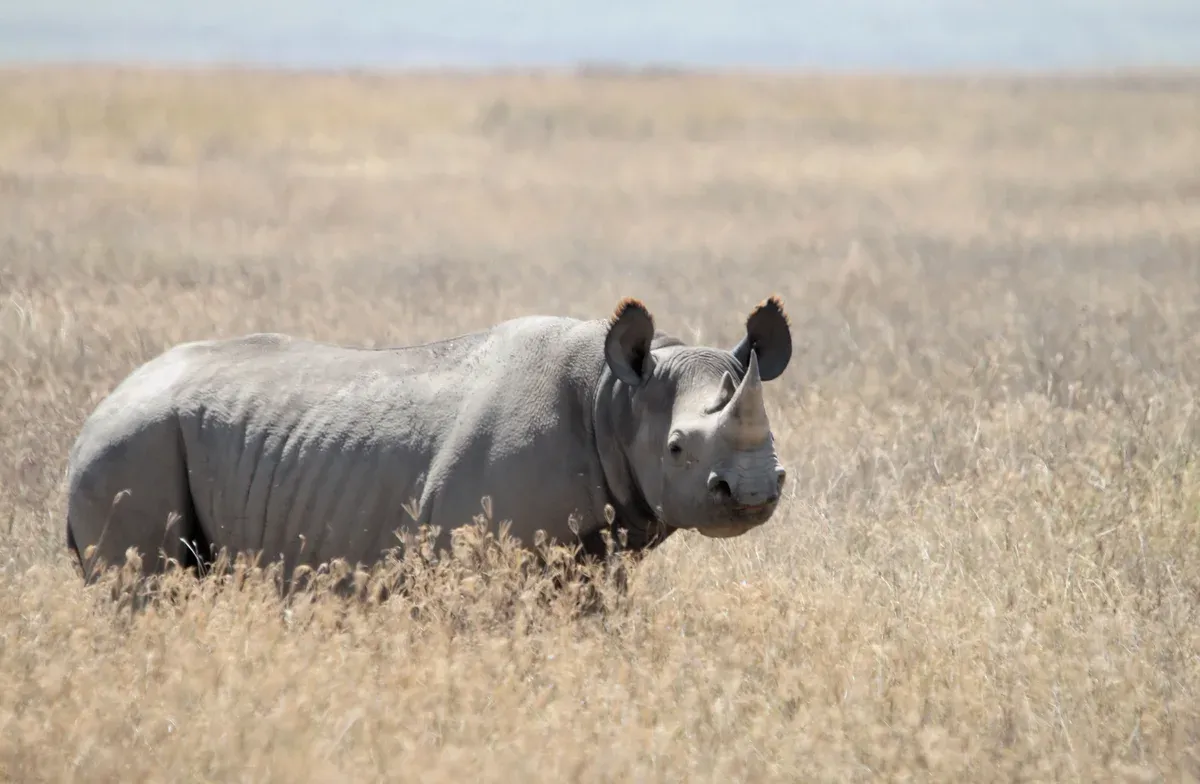
A black rhinoceros at Ngorongoro. Photo: Yoky, CC BY-SA 3.0, via Wikimedia Commons
Do and Don't at the Crater
Five habits that make a crater day work, and four that spoil it, all drawn from the published rules and figures above.
Do
- Do start the descent early because the Seneto Descent Gate closes at 16:00 and only 50 vehicles are permitted in the crater at one time under the IUCN-linked cap reported by Wikipedia.
- Do pack warm layers for the rim because Duma Explorer puts rim night temperatures at about 0 to 5 degrees C at 2,300 metres.
- Do confirm the crater service fee is included before you pay, because the $295 per vehicle fee is charged once per trip and some listings, such as the $770 camping safari, do not state it.
- Do stay on authorised roads and respect the 25 km/h speed limit, which the NCAA sets across the conservation area.
- Do carry your passport or ID because the tariff rules treat proof of identification as mandatory at entry gates.
Don't
- Don't enter the Lerai or Layanai forests because the NCAA rules forbid entry to both.
- Don't bring a dog into the crater because the NCAA rules prohibit it.
- Don't count on a rhino sighting because the counts run from 26-40 (Duma Explorer) to about 55 (Wikipedia) and the animals move.
- Don't crowd an animal because the NCAA limits vehicles to five around one animal or kill.
Where to Stay Near the Ngorongoro Crater
Each link opens the live room list for that place on the booking site, with today's prices. A night close to the gate helps for an early descent.
Karatu
- Suits
- Lodges below the crater highlands, outside the conservation area
Karatu is the town most crater packages sleep in.
See stays in KaratuNgorongoro crater rim
- Suits
- Lodges on the rim above the crater
Rim nights are cold, so pack a warm layer.
See stays in Ngorongoro crater rimArusha
- Suits
- Hotels for the nights before and after the safari
Most packages in the catalog start and end in Arusha.
See stays in ArushaNgorongoro Crater FAQ
How high is the Ngorongoro Crater?
The floor sits at 1,800 metres above sea level and the rim at about 2,300 metres, roughly 600 to 610 metres above the floor. Nights up top are cold, which is why packing for the rim matters as much as packing for game drives, so check what to wear on safari.
Why are there no giraffes in Ngorongoro?
Wikipedia lists giraffe among the animals absent from the crater, alongside impala, topi, oribi and Nile crocodile, and gives no single cause. Giraffe are common elsewhere in northern Tanzania, see Serengeti animals.
What is the rarest animal to see in the Ngorongoro Crater?
The eastern black rhino is the rarest animal most visitors hope for, with counts from 26-40 under 24-hour ranger protection per Duma Explorer to about 55 per Wikipedia. Look carefully but never count on it, and read the full wildlife picture on the Ngorongoro page.
How much does a Ngorongoro Crater safari cost?
The NCAA tariff charges $70.80 per adult for the entry permit plus a $295 crater service fee per vehicle, and lodge stays add a $59 per night concession fee per adult. A 3-day camping package that already includes the crater fee costs $900, as shown on the 3-Day Serengeti Big Five Safari page.
How long can you spend on the crater floor?
The NCAA lists no hard time limit in its regulations, but gates open at 06:00, close at 18:00 and the Seneto Descent Gate closes at 16:00, and Duma Explorer describes a six-hour limit per game drive as a soft logistical limit. Compare how long each itinerary stays on the floor in the homepage comparison table.
Where do you sleep on a Ngorongoro Crater safari?
Packages differ, with some sleeping on the rim and others in Karatu lodges. The camping itineraries use Simba public campsite, which the $900 3-Day Serengeti Big Five Safari names in its itinerary, while lodge trips use rim and Karatu lodges. Campers should pack for nights of about 0 to 5 degrees C on the rim.