 Serengeti Safari Packages
Safari Clothes for Men: What to Pack for a Tanzania Safari
Safari clothes for men on a Tanzania trip come down to a short list: convertible trousers, collared long-sleeve shirts, a fleece for cold mornings, a wide-brimmed hat and closed shoes. This guide gives a full outfit list for the Serengeti circuit, explains when shorts work, what lodges expect after dark and how laundry in camp lets you pack light. It also covers the rules that catch men out: the camouflage restriction that publishers describe, the plastic bag ban at entry and modest dress in villages and on Zanzibar. When you know what to wear, browse the Serengeti safari packages compared on this site and pick the trip length that fits your wardrobe and your budget.
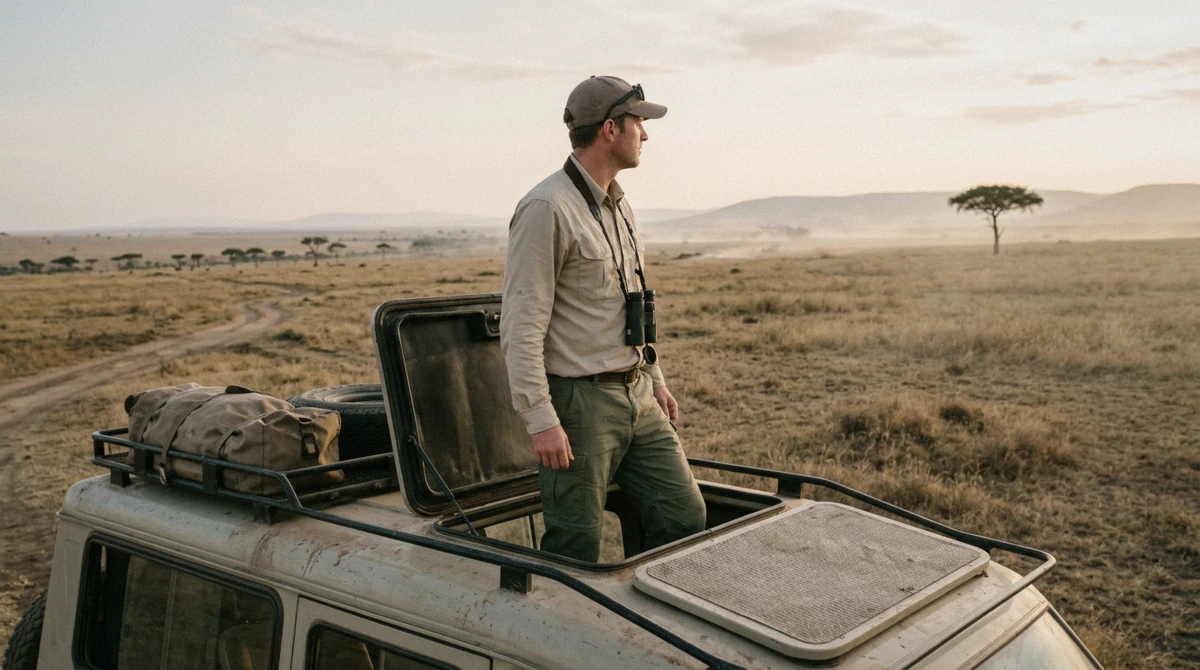
What a man typically wears on a Serengeti game drive.
Quick answer The men's safari outfit in brief
Pack three to four collared long-sleeve shirts and two to three pairs of long pants for a week, which Talk of the House advises, plus a fleece and a light jacket for mornings that Tanzania Specialist says can dip below 10°C (50°F). Keep every item neutral: khaki, olive, beige or muted brown. Skip black, navy and blue because Expert Africa and Foot Slopes Tours say they attract tsetse flies. Leave camouflage at home because Duma Explorer says it is illegal in Tanzania.
Key takeaways
- Three to four shirts can cover even a long trip because Tanzania Specialist says most lodges and camps offer same-day or next-day laundry. See the full core outfit list.
- Cold mornings on open vehicles and on the Ngorongoro rim make layers essential, and Discover Africa says rim nights drop below 10°C. Read the layering advice.
- If you fly into the Serengeti on a trip such as the Serengeti Fly-In Safari, Duma Explorer says a day pack should stay under 3 to 4 kg, so a soft bag and fewer clothes matter.
- Documents, duffels and gear sit outside this guide, so check the site's safari packing list before you zip the bag.
The Core Safari Outfit for Men
A man's safari wardrobe is small. The point is a few items that do three jobs at once: block sun, dodge tsetse flies and survive dust on the plains.
The Full List, Quantified
Publishers agree on the same short list. Talk of the House advises three to four long-sleeved shirts for a week with roll-up sleeves and button tabs, and two to three pairs of long pants with convertible pants working well. Talk of the House also advises one light jacket or overshirt, chinos with a breathable shirt for dinners, and a separate bag for dirty laundry. SafariFind adds a wide-brimmed hat with a brim of at least three inches plus a scarf or bandana, and waterproof hiking boots with ankle support broken in before the trip. The table below assembles those quantities for a five-day trip, the length of the 5-Day Serengeti Camping Safari, and explains why each item earns its place.
On a 3-day trip such as the 3-Day Serengeti Big Five Safari, the camping departures do not list laundry, so ask the operator before you pack fewer shirts. On an 8-day trip like the 8-Day Serengeti Migration Safari, the same list holds, because Kagera Safaris says most camps offer free same-day laundry and washing usually takes up to 24 hours. Tanzania Specialist goes further and says three to four outfits can cover a two-week trip.
| Item | How many for 5 days | Why it works |
|---|---|---|
| Collared long-sleeve shirts | 3 to 4 (Talk of the House advises 3 to 4 for a week) | Roll-up sleeves handle heat. Long sleeves cut sun and shield arms from insects. Ultimate Kilimanjaro says they also protect from brush scratches. |
| T-shirts | 1 to 2 (Born Wild lists them) | Fine in camp after the drive. Tanzania Specialist says UPF 50 long-sleeve shirts reduce how often arms and torso need sunscreen, so keep tees for evenings. |
| Long trousers | 2 to 3 (Talk of the House advises 2 to 3 pairs) | Convertible pants zip into shorts, so one pair does two jobs. Kandoo Adventures says most people rotate the same few comfortable pieces. |
| Shorts | 1 to 2 (SafariFind advises two pairs) | Knee-length, neutral, with deep pockets. See the shorts section below for when they work. |
| Fleece or thermal mid-layer | 1 (Born Wild lists a fleece and thermal vest) | Tanzania Specialist recommends a moisture-wicking base, a mid-weight fleece or softshell, and a windproof shell. |
| Light jacket or windbreaker | 1 (SafariFind and Talk of the House both advise one) | SafariFind says take it off as the sun rises and put it back on when the vehicle moves. Talk of the House notes midday can reach 80 to 90°F. |
| Wide-brimmed hat | 1 | SafariFind says a brim of at least three inches, plus a scarf or bandana for dust. |
| Hiking shoes or boots | 1 pair | Ultimate Kilimanjaro prefers closed-toe shoes over sandals because of poor traction and the risk of feet being stepped on in the vehicle. SafariFind says break them in first. |
| Sandals or flip-flops | 1 pair | Tanzania Specialist advises one pair of walking shoes and one pair of sandals for camp. |
| Socks and underwear | Enough for the whole trip | Kagera Safaris says some camps ask guests to wash their own underwear due to local customs, and Travelpander advises packing enough for the whole trip. |
Colours: The Short Version
Tanzania Specialist advises earth tones such as khaki, olive, beige, tan or muted brown because they blend in, stay cooler and hide dust. CDC advises neutral-coloured clothing because tsetse flies are drawn to bright colours and very dark colours, and CDC advises medium-weight fabric because the flies can bite through thin material. Avoid white, which Foot Slopes Tours says gets dirty quickly, and avoid camouflage entirely, which Duma Explorer says is illegal in Tanzania.
The full colour logic, including why dark navy shows dust and attracts flies in wooded areas around Tarangire National Park, is covered in depth in the guide to what to wear on safari.
Layers for Cold Mornings and the Crater Rim
A Serengeti day swings hard. Tanzania Specialist says morning game drives can dip below 10°C (50°F) while midday can reach about 30°C (86°F), and SafariBookings puts average daytime highs at about 27°C (81°F) with chilly nights. Open vehicles make the cold worse.
Foot Slopes Tours says mornings and evenings can be cold on open vehicles and at altitude such as the Ngorongoro rim, and recommends a breathable base layer, a long-sleeve shirt and a warm fleece or windbreaker, removed as the day warms. Discover Africa says Ngorongoro temperatures seldom rise above 25°C by day and more often than not drop below 10°C at night, and that the altitude gap between the crater floor and rim usually causes a significant build-up of mist in the early mornings. Expert Africa says warm clothing matters most for the Ngorongoro Crater and the Serengeti from June to the end of August.
If your trip camps on the rim, like the itineraries that overnight at the Simba campsite in Ngorongoro, pack a warm hat and gloves, which Expert Africa lists as items to bring if needed.
Sources: Talk of the House, SafariFind, Tanzania Specialist, CDC, Discover Africa, Foot Slopes Tours
Shorts, Shoes and the Sun
Shorts are not forbidden on safari, but they have a season and a place. Shoes are the item men most often get wrong.
When Shorts Work
Talk of the House says knee-length neutral shorts are acceptable and short shorts should be skipped for bush walks. SafariFind advises two pairs of lightweight tan or beige safari shorts with deep pockets. Shorts work best in the middle of the day on game drives in the dry season, when June to October is the dry season per SafariBookings and Arusha rainfall drops to 10 mm in July and August per the Weatherbase table cited by Wikipedia.
Long trousers win the rest of the time. Long pants guard against sun, morning cold, mosquitoes after dusk and tsetse flies in wooded country. CDC lists long pants, long sleeves and socks as the core protection against tsetse bites, and the CDC MMWR report advises thick, neutral-coloured clothing with all three.
On bush walks, cover up fully.
Shoes and Sun Protection
SafariFind advises waterproof hiking boots with ankle support that are broken in before the trip, because brand-new shoes cause blisters, a point Kandoo Adventures also makes. Kandoo recommends lightweight closed-toe hiking or trail shoes with moisture-wicking socks and sandals for camp. Tanzania Specialist advises one pair of comfortable walking shoes and one pair of sandals or flip-flops.
Born Wild advises a spare pair of socks in case shoes get soaked. For sun, Expert Africa lists sunglasses, sunscreen, lip balm, a shady hat and insect repellent as essentials, and Tanzania Specialist says UPF 50 long-sleeve shirts reduce how often arms and torso need sunscreen. A buff or scarf against sun and dust, which Kandoo Adventures advises, earns its spot on the washboard road from Naabi Hill Gate to Seronera that Roadtrip Africa describes as bumpy with washboard surfaces.
What Not to Wear on an African Safari
Clothing mistakes to avoid on an African safari, such as colours and fabrics. Third-party video by Wolters World. This site did not shoot it and has no relationship with the creator.
Evenings, Laundry and Lodges
Dusk changes the dress code twice: once for mosquitoes, once for dinner. Camp laundry decides how many shirts you carry.
What Lodges Expect After Dark
Safari lodges are informal. Kandoo Adventures says lodges are informal and suggests neutral colours such as beige, olive or muted green at dinner. Foot Slopes Tours says lodge dress codes are generally relaxed, with smart casual preferred for evenings. Talk of the House says men can wear a clean button-down with chinos in the evening, so one wrinkle-resistant shirt kept for dinners covers it, a tip Have Clothes Will Travel echoes with wrinkle-resistant button-down shirts for dinners.
Mosquitoes are the other evening factor. CDC advises covering exposed skin with long sleeves, long pants and hats against mosquitoes, and CDC recommends a repellent with 20 percent or more DEET, with picaridin and oil of lemon eucalyptus as other options. Duma Explorer advises DEET at 25 to 30 percent, mainly at dawn and dusk, in cream or roll-on form rather than aerosol. CDC advises treating clothing and gear with permethrin, never applying permethrin to skin, and using a bed net if the sleeping area is exposed to the outdoors. CDC lists malaria risk in Tanzania in all areas below 1,800 m (5,906 ft).
Laundry keeps the bag small. Tanzania Specialist says most lodges and camps offer same-day or next-day laundry, often included in the rate. Kagera Safaris says most camps offer free same-day laundry, washing usually takes up to 24 hours, and clothes are air-dried so drying time depends on the weather. Kagera Safaris also says guests may be asked to wash their own underwear due to local customs, especially at small remote camps, with eco-friendly detergent provided, and Travelpander says the same for cultural reasons. Pack enough underwear for the trip and a small supply of travel detergent. On a private trip such as the 3-Day Private Serengeti Safari, ask the operator whether laundry is offered, because the listing does not mention it. The 5-Day Serengeti Ngorongoro Safari listing does not mention it either.
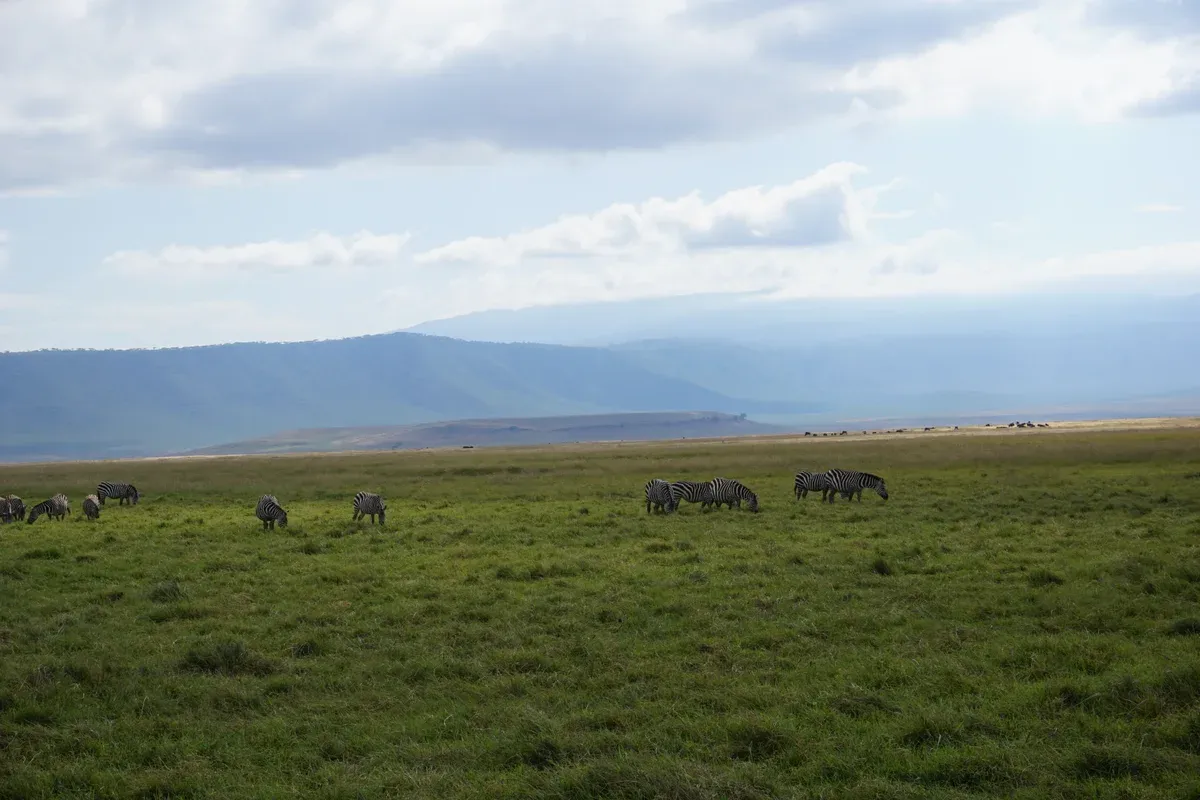
Zebra on the grassy floor of Ngorongoro Crater. Photo: Roryjm0, CC BY-SA 4.0, via Wikimedia Commons
Do's and Don'ts for Men's Safari Clothing
Do
- Do wear neutral colours such as khaki, olive and beige, because CDC says tsetse flies are drawn to bright colours and very dark colours, and Tanzania Specialist says earth tones stay cooler and hide dust.
- Do pack medium-weight fabric rather than thin material, because CDC advises it since tsetse flies can bite through thin cloth.
- Do bring a fleece and a windproof layer for the Ngorongoro rim, because Discover Africa says temperatures there more often than not drop below 10°C at night and mist builds in the early mornings.
- Do hand your laundry in on day one of a multi-day stay, because Kagera Safaris says washing usually takes up to 24 hours and Tanzania Specialist says three to four outfits can cover a two-week trip.
- Do carry a long-sleeve layer for evenings, because CDC advises covering exposed skin against mosquitoes and CDC lists malaria risk across Tanzania below 1,800 m (5,906 ft).
Don't
- Don't pack camouflage in any form, because Duma Explorer says it is illegal in Tanzania with an exemption only for military personnel on official business, and the ban covers jackets, pants, hats and even bag straps.
- Don't wear black, navy or dark blue in the bush, because Expert Africa says black and blue clothing attracts tsetse flies, which Foot Slopes Tours says also absorb heat and show dust.
- Don't bring plastic shopping bags for dirty laundry, because Duma Explorer says Tanzania's single-use plastic bag ban took effect on 1 June 2019 and covers all plastic bags regardless of thickness, with zip-lock bags exempt provided they are not discarded in the country.
- Don't wear short shorts on bush walks or short trousers in Stone Town, because Talk of the House says short shorts should be skipped on walks and Go2Africa advises covering shoulders and knees in Stone Town and local villages.
Men's Safari Clothing: Questions
What should a man wear on safari in Tanzania?
Collared long-sleeve shirts, convertible long trousers, a fleece, a light windbreaker and a wide-brimmed hat with a brim of at least three inches, all in neutral colours, per Talk of the House and SafariFind. Talk of the House advises three to four shirts and two to three pairs of pants for a week. For the complete item-by-item logic see what to wear on safari.
How many shirts do I need for a 5-day safari?
Three to four is plenty. Talk of the House advises three to four long-sleeved shirts for a week, and Kagera Safaris says most camps offer free same-day laundry with washing taking up to 24 hours, so men can pack fewer shirts. The listing for the 5-Day Serengeti Camping Safari does not mention laundry, so confirm it with the operator.
Can men wear shorts on safari?
Yes, in the right setting. Talk of the House says knee-length neutral shorts are acceptable and short shorts should be skipped for bush walks, and SafariFind advises two pairs of lightweight tan or beige shorts with deep pockets. Long trousers remain better against tsetse flies, since CDC lists long pants, long sleeves and socks as core bite protection, as covered in the tsetse fly guide.
What do men wear in the evening at a safari lodge?
Smart casual: a clean button-down shirt with chinos, which Talk of the House advises, and no formal wear. Kandoo Adventures says safari lodges are informal and Foot Slopes Tours says smart casual is preferred for evenings. Long sleeves also serve as mosquito cover after dark, where CDC advises repellent with 20 percent or more DEET.
What should men wear in Zanzibar or villages after a safari?
Cover shoulders and knees away from the beach. Go2Africa describes Zanzibar as a conservative, predominantly Muslim society and advises covering shoulders and knees in Stone Town and local villages, while swimwear and shorts are fine at a resort or on the beach. Tanzania Specialist says knee-length shorts or trousers are appropriate for men in Zanzibar towns. If you combine the coast with the bush, the Zanzibar to Serengeti Safari flies you from Zanzibar to the Serengeti and back.
Do I need special safari clothes for a fly-in trip with a weight limit?
You need fewer and lighter items. Duma Explorer says a day pack counts toward the bush-flight weight limit and should stay under 3 to 4 kg, so soft bags and quick-drying synthetics are the answer. Born Wild recommends loose, fast-drying synthetics. A fly-in option on this site is the Serengeti Fly-In Safari.